Fiberglass vs. Concrete Stations: Pick the Right Enclosure
Cost, lead time, corrosion resistance, and longevity trade-offs to consider before breaking ground.
The enclosure decision on a pump station looks like a simple choice between two materials and is actually a choice between two project delivery models. Fiberglass packaged stations ship from a factory as a single, pre-tested unit and install on a prepared pad in a day. Cast-in-place concrete stations are built on site over weeks or months by general contractors coordinating multiple trades. Both can deliver a thirty-year asset; they get there along very different paths, with different cost structures, different risk profiles, and different operational implications. Choosing well requires understanding both paths, not just the materials.
Dakota Pump builds packaged fiberglass stations and also designs the mechanical and electrical scope that goes inside cast-in-place concrete wet wells when a project calls for one. We do not have a dog in the fight; we have an interest in the right station getting built. This article lays out how we think through the choice with engineers and owners, the questions that actually drive the decision, and the situations where each option clearly wins.
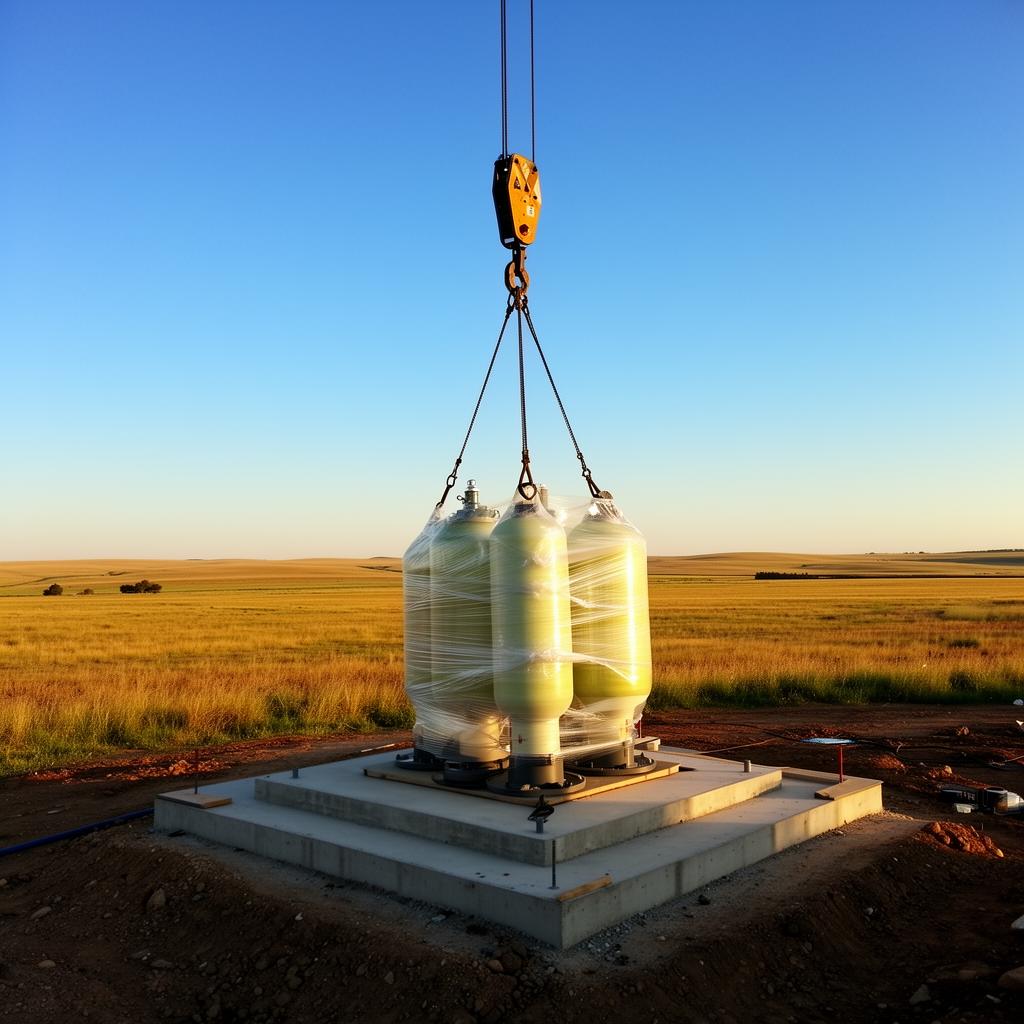
Fiberglass packaged stations win on speed, factory quality, corrosion resistance, and total installed cost for the majority of municipal and rural sites. A typical fiberglass station ships fully assembled with pumps, valves, controls, ventilation, lighting, and access hatches all installed and tested at the factory. The site work consists of excavating, placing a concrete pad or ballast slab, setting the station with a crane, connecting suction and discharge piping, and making electrical and communication terminations. A crew that has done the work before completes a typical install in one to three days. The station goes from delivery truck to operating in less time than it takes to form and pour a single concrete wall.
The factory environment matters more than most people realize. A pump station built on a shop floor under controlled conditions, by the same crew that built the last fifty stations, is consistently higher quality than a station assembled outdoors by whichever trades the general contractor scheduled that week. Piping fits up correctly the first time. Wiring is routed cleanly. Every connection is tested under shop conditions before the station leaves the building. The punch list at field acceptance is typically a handful of items rather than a multi-page document.
Corrosion resistance is the other major fiberglass advantage. The interior of a wastewater wet well is one of the most aggressive environments in civil engineering. Hydrogen sulfide concentrations of a few hundred parts per million convert into sulfuric acid on every wet surface, and that acid attacks concrete and uncoated steel relentlessly. Fiberglass is inert in that environment. A fiberglass wet well does not require an interior coating system, does not develop spalling at the splash line, and does not lose structural integrity over decades of service. Concrete stations require a coating system specifically designed for hydrogen sulfide service, and that coating becomes a recurring maintenance item with a finite service life of typically five to ten years between renewals.
Cast-in-place concrete wins on the largest stations, on sites with extreme groundwater or buoyancy conditions, and where local code or owner standards explicitly require it. Above roughly 12 to 15 feet in diameter, the logistics of shipping a fiberglass tank become difficult enough that an on-site pour is usually the right answer. On sites with very high groundwater tables and no economical way to dewater, the mass of a cast-in-place concrete structure may be necessary to resist flotation without an elaborate anchoring system. In jurisdictions where the local public works standard specifies concrete, the conversation is over before it starts, and the engineering effort is better spent making the concrete station as good as possible rather than arguing about the material.
Concrete also has a genuine longevity advantage when it is built correctly and maintained correctly. A properly designed concrete wet well with a high-performance coating, regular inspection, and timely coating renewal can serve for fifty years or more. The qualifier matters: built correctly, maintained correctly. A concrete station that was poured by a general contractor unfamiliar with sulfide service, coated with whatever product the lowest bidder proposed, and inspected on no particular schedule will not reach fifty years. It will reach fifteen and then become a renovation project.
Cost comparison depends on what is being counted. The bare materials cost of a small concrete wet well is often lower than the bare materials cost of an equivalent fiberglass package. By the time the comparison is fair, the concrete number has to include excavation, dewatering, formwork, reinforcing, pours, cures, coating, separate procurement and installation of pumps, valves, piping, controls, ventilation, lighting, and access hardware, plus the general contractor's overhead and profit on all of it. The fiberglass number has to include shipping, the concrete pad, setting, and the same utility connections. In our experience the total installed cost favors fiberglass for stations under about 12 feet in diameter and gets closer to a wash above that.
Schedule cost is often the larger number and it almost never appears in a bid comparison. A fiberglass station that arrives in week six and is operating in week seven defers the capital cost of the existing system for months less than a concrete station that takes a full construction season to complete. For utilities operating against a connection moratorium, a regulatory deadline, or a developer's pressure to release lots for occupancy, the schedule difference is the entire conversation.
Lead time has moved against fiberglass over the last several years and is worth a direct conversation. Resin supply, glass roving supply, and labor availability in the composites industry have all tightened. A custom fiberglass station that used to ship in eight weeks now typically ships in 16 to 24 weeks depending on the manufacturer and the configuration. Cast-in-place concrete schedules have not improved either, but they were already longer. A realistic comparison today is roughly four to six months from order to operating fiberglass, versus six to nine months from notice to proceed to operating concrete on a comparable site.
Owners who plan ahead capture the fiberglass advantage. Owners who wait until the existing station is failing to start the procurement either pay for an emergency bypass during the lead time or accept a smaller, in-stock package that may not match the long-term need. The single highest-leverage thing a utility can do on station replacement is start the conversation early enough that the right station can be built rather than the available one.
A few site conditions push the decision in clear directions. Sites with shallow rock favor fiberglass, because the excavation is the most expensive part of either option and a smaller, lighter station means a smaller excavation. Sites with high groundwater favor concrete unless the fiberglass design includes a properly engineered anti-flotation system, which is straightforward but adds cost. Sites with limited crane access favor concrete, because a fiberglass package has to be set in one piece by a crane large enough to handle it. Sites with aggressive ambient conditions, whether from industrial discharges into the collection system or from saltwater intrusion in coastal areas, favor fiberglass because of the corrosion resistance.
Aesthetics matter on some sites and not on others. A lift station serving a new residential development with HOA covenants will probably need a building enclosure regardless of the wet well material, and at that point the wet well is invisible and the material choice reverts to engineering factors. A lift station at the edge of a treatment plant where appearance does not matter can use whichever enclosure is most economical. The aesthetic question rarely changes the wet well decision; it changes the budget for the building around it.
Maintenance implications run in opposite directions over a thirty year horizon. A fiberglass station has very low recurring maintenance on the structure itself, with the bulk of the work focused on the mechanical and electrical components inside. A concrete station has the same mechanical and electrical maintenance plus a recurring coating renewal cycle. Whether that recurring cost is significant depends on the size of the station, the aggressiveness of the service, and the cost of bypass during coating work. For a small station the coating cycle is a manageable line item. For a large station the coating cycle can become a major capital event that requires temporary bypass pumping and extended outages.
Modifications and expansions also run differently. A fiberglass station can usually accept a third or fourth pump if the original design included the provision for one, but adding a pump beyond the original capacity is a more involved retrofit than the same change on a larger concrete wet well. Concrete stations are easier to expand by adding an adjacent structure and tying the two together, which is occasionally useful on growing systems where the long-term flow projection is genuinely uncertain. If the future is unpredictable enough, slightly oversizing a concrete station on day one may be more economical than rebuilding a fiberglass station at the design horizon.
Two failure modes deserve direct mention because they are the ones that surprise people. Fiberglass stations fail most often from inadequate anchoring against flotation when the wet well is empty and the groundwater is high. Concrete stations fail most often from coating failures that go unnoticed until the substrate has lost significant section. Both failure modes are preventable with competent design and consistent inspection. Both are expensive when they occur.
The other failure mode worth naming is the package that was sized for the wrong duty. A perfect enclosure with the wrong pumps inside is still the wrong station, and a fiberglass package is harder to repurpose than a concrete wet well because the internal piping is fixed at the factory. The way to avoid this failure is to do the hydraulic and demand work carefully before the package is ordered, which is the engineering effort that the Dakota Pump team does on every project regardless of the enclosure material.
If the project is a typical municipal or rural lift station up to about 12 feet in diameter, on a normal site, with a normal schedule, the right answer is almost always a factory-built fiberglass package. The combination of speed, factory quality, and corrosion resistance is hard to argue with at that scale. If the project is larger than that, or sits on an unusual site, or has to satisfy a local standard that specifies concrete, the right answer is a cast-in-place concrete wet well with the same engineering rigor applied to the mechanical, electrical, and controls scope that we would apply to a packaged station.
The least productive version of this conversation is the one that treats it as a religious question. Both materials work. Both have built stations that are still running after thirty years and stations that needed renovation after fifteen. The variables that determine which outcome a project gets are mostly about design discipline, installation quality, and maintenance program, not about the choice of fiberglass versus concrete. Pick the enclosure that fits the site and the schedule, and put the engineering effort where it actually matters.
Dakota Pump is happy to review a project's site conditions, demand profile, schedule, and budget and recommend the enclosure that fits best, with no commitment to use our packaged product if a concrete wet well is the better answer. Reach out before the drawings go out for bid and we will save the design team a revision cycle and the owner a significant amount of money.