The Lift Station Maintenance Checklist Every Operator Needs
Daily, monthly, and annual tasks that prevent the after-hours calls you never want to take.
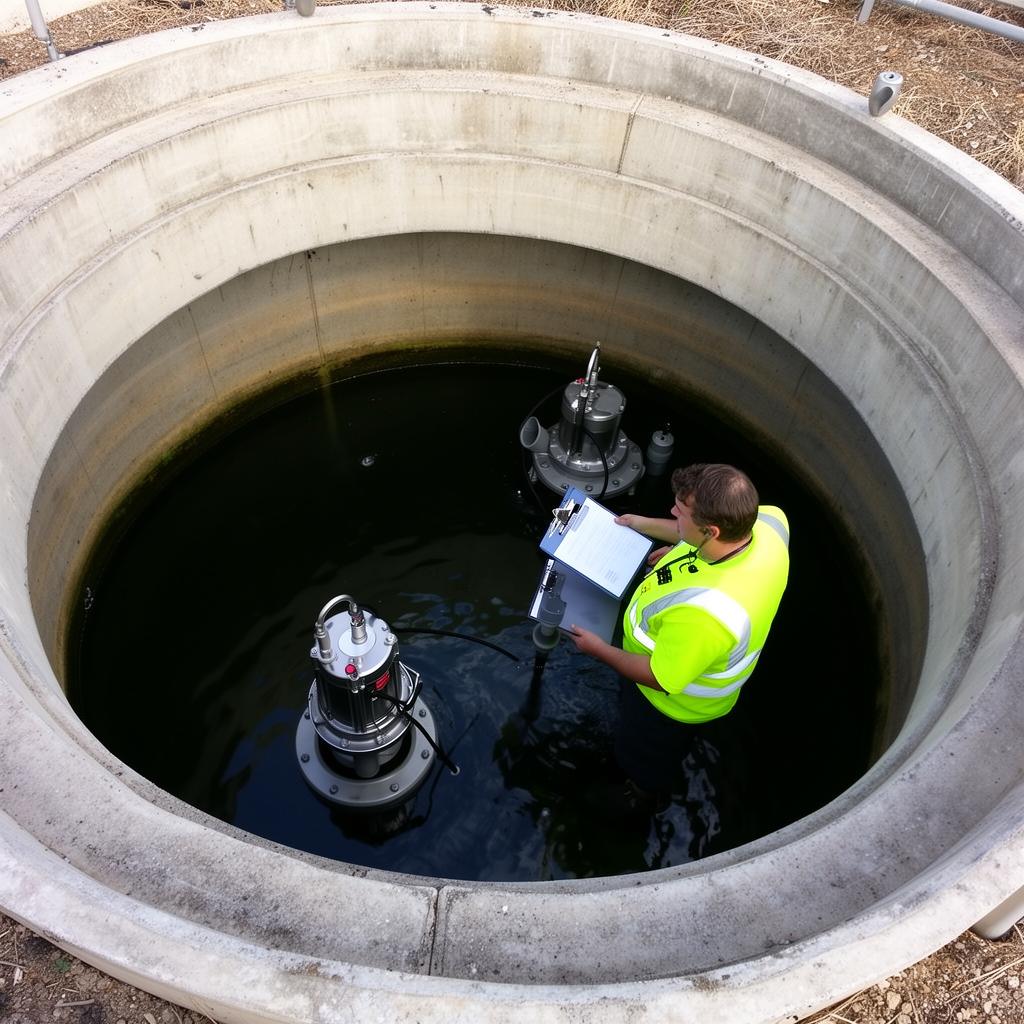
A lift station that fails on a Friday night is almost never a surprise. The signs show up earlier, usually weeks or months earlier, in runtime trends, in amp draw, in float behavior, in the small smells and sounds an attentive operator notices. The job of a maintenance program is to turn those signs into scheduled work orders during business hours instead of emergency callouts at midnight. This article is the checklist we hand to operators when we hand over a new Dakota Pump station, organized the way maintenance actually gets done: daily, weekly, monthly, quarterly, and annually, with the why behind each task so the checklist becomes a tool rather than a chore.
Before any of the recurring tasks matter, the station needs a baseline. The first thing we do on a new install, and the first thing we recommend on any existing station that lacks documentation, is to capture the as-found condition: pump model and serial numbers, impeller diameter, motor nameplate data, control panel schematic, float or transducer set points, alarm thresholds, normal cycle counts, normal amp draw at start and at steady state, and a photo of the wet well at a known level. Every measurement taken after that gets compared back to this baseline. Drift from the baseline is what you are actually looking for; the absolute numbers matter less than the trend.
Daily tasks are short, ideally automated, and focused on catching anything that changed in the last twenty-four hours. Confirm that lead-lag alternation cycled at least once and that both pumps actually ran. Review any alarms that came in overnight, including ones that cleared themselves. Check pump runtime totals and compare cycles per hour to the baseline; a sudden jump in cycles often means a stuck check valve, a leaking discharge, or an inflow event that bears investigating. Confirm the wet well level is within its normal operating band and that the high-level float or transducer alarm path tested clean in the most recent daily self-check.
If the station is on SCADA, most of the daily check is a one-screen review from a desk. If it is not, the daily check is a brief site visit or a phone call to a remote operator. Either way the discipline matters more than the medium. Operators who look at their stations every day catch problems while they are still cheap. Operators who only look when something alarms inherit larger problems on a less convenient schedule.
Weekly tasks add a layer of physical inspection. Walk the station. Listen for cavitation, bearing noise, or check valve chatter. Smell for septic gas escaping a failed seal, ozone from a stressed contactor, or hot insulation from a struggling motor. Look at the control panel for any indicator that is not in its normal state, any condensation inside the enclosure, any pest activity. Confirm the dehumidifier or panel heater is operating if the climate calls for one. Check that the wet well hatch seals are intact and that the vent is clear.
Read the elapsed time meters and the cycle counters and write the numbers down. A spreadsheet, a logbook, or a SCADA historian all work; what matters is that the numbers exist somewhere a week from now. Pump runtime is the single most useful trend you can keep on a lift station. Rising runtime per unit of inflow is the earliest indicator that an impeller is wearing, a volute is filling with grit, or a discharge line is partially blocked. Falling runtime per cycle, paired with rising cycles per hour, usually means a check valve is leaking by and the station is moving the same slug of water more than once.
Monthly tasks are where preventive maintenance starts to do real work. Clean float switches and inspect their tethers. Floats accumulate grease and rags faster than anything else in a wet well, and a stuck float is the most common cause of a station overflow. If the station uses a submersible level transducer, pull it, wipe the diaphragm, and verify its reading against a manual measurement. If it uses ultrasonic or radar, confirm the target is clean and the reading matches a dipped level.
Inspect check valves by listening during a pump shutdown. A clean check valve closes with a single, soft thump. A worn check valve slams, chatters, or allows audible reverse flow. Either symptom shortens the life of every component downstream of it, including the pump it is supposed to protect. Plan to replace the internals on a fixed interval rather than waiting for failure; the parts are inexpensive and the labor is dramatically less when scheduled.
Exercise the standby generator under load for at least thirty minutes. A no-load weekly exercise is better than nothing, but it does not test the components that actually fail: the transfer switch, the cooling system, the fuel system under draw, and the voltage regulator under real current. Run the station on generator power once a month, watch the transfer in both directions, and log fuel level and coolant temperature at the end of the run.
Verify the alarm dialer or SCADA notification path by triggering a test alarm and confirming the right person actually received it. Phone numbers change, email addresses change, and on-call rotations change. An alarm system that quietly stopped working six months ago is worse than no alarm system at all, because it gives operators a false sense of coverage.
Quarterly tasks lean into the wear items. Pull each pump, or at minimum each lead pump, and inspect the impeller, the volute, and the lower seal. Submersible pumps in municipal wastewater service should be expected to wear; the question is how fast and how predictably. Measure impeller clearance against the manufacturer's specification and adjust or replace as needed. Inspect the cable entry for moisture intrusion, which is the single most common failure mode on submersible pumps after impeller wear. Check the oil in the seal chamber; milky oil means the lower seal is compromised and the motor seal is doing all the work, which is a finite condition.
Megger the motor windings and record the insulation resistance. A single reading is not very useful, but a trend over multiple quarters tells you exactly when a motor is heading toward failure. Plan to replace or rewind when the trend, not the absolute value, says it is time. Inspect the lifting chain, the guide rails, and the discharge connection. A failed lifting chain during a pump pull is the most common safety incident on a lift station, and it is entirely preventable with a five-minute inspection.
Walk the force main alignment for visible distress, especially at known crossings, low points with air-vacuum valves, and high points where surge tends to concentrate. Confirm air-vacuum valves are operating; a stuck valve will let a force main column separate during a pump trip, and the resulting surge will eventually find the weakest joint.
Annual tasks are the deep work. Pull every pump for a full inspection regardless of duty assignment. Send a sample of seal oil to a lab; the lab report will tell you exactly which seal is failing and how fast. Pressure-test the discharge piping inside the station to its design rating and inspect every flange, every gasket, and every coupling. Inspect the wet well coating system; lift station wet wells are aggressive environments, and a coating that has failed in patches will let hydrogen sulfide attack the concrete underneath much faster than most operators expect. Plan to refresh the coating on a fixed interval, typically every five to seven years depending on the system, rather than waiting for visible substrate damage.
Replace seals on a five-year interval whether they have failed or not. A planned seal replacement during a scheduled outage costs a fraction of an unplanned failure that lets the station flood the motor cavity at 2 a.m. The same logic applies to bearings, to contactors that have seen more than a million cycles, and to any electronic component whose manufacturer publishes a useful life rating. Preventive replacement is almost always cheaper than reactive replacement once the downtime cost is included.
Calibrate every analog instrument against a known reference. Pressure transmitters drift. Level transducers drift. Flow meters drift, especially mag meters in wastewater service where the electrodes foul. A calibration that shows no drift is still useful because it documents the instrument as trustworthy. A calibration that shows significant drift is more useful because it tells you which trended numbers from the last year need to be re-evaluated.
Review and update the station's emergency response plan. Who gets called when the station alarms outside business hours, in what order, with what backup. Where is the nearest portable bypass pump, who owns it, and how fast can it be deployed. What is the notification path to the regulator if a sanitary sewer overflow occurs. These questions all have answers; the annual review is the time to make sure the answers are still current.
A few habits separate operators whose stations rarely fail from operators who live with chronic problems. They write everything down, even when it seems redundant. They trend the numbers that matter, especially runtime, cycles, and amp draw, and they look at the trends regularly rather than only after an incident. They replace parts on schedule rather than on failure. They train every new operator on every station, not just the ones near the office. They keep spares on the shelf for the components most likely to fail, which on most stations means a check valve rebuild kit, a set of seals, a spare float, a spare contactor, and a complete spare pump.
They also build a working relationship with their pump supplier before they need one. The middle of an emergency is a bad time to introduce yourself to a service team. The Dakota Pump service group is happy to walk a station with an operator at no charge, review the existing maintenance program, and suggest the few changes that will have the largest impact. We also offer full maintenance agreements for utilities that prefer to outsource the recurring work, and operator training programs for utilities that prefer to keep it in-house. Either path is better than the unmanaged path, which is the one that produces the Friday night phone call.
If you take only one thing from this article, take this: a lift station rewards attention disproportionately. A small amount of disciplined, scheduled work prevents an enormous amount of unscheduled work. The checklist is not the point. The habit of running through it, week after week, year after year, is the point. Stations maintained that way last for decades and embarrass nobody. Stations maintained any other way eventually generate a story that someone will be telling at the next operators' conference, and you do not want it to be yours.